Sep 1, 2026 | Garage Door Comparisons, Garage Door Installation, Garage Door Types, Roller garage doors
A properly sealed roller garage door needs protection at three points: the bottom where the curtain meets the floor, the sides where it runs in the guide rails and the top where it meets the box. Rubber or brush seals at each of these points stop draughts, water, dust and pests getting in, and they wear out over time, so most roller doors need a seal replaced at some point in their life.
This article covers why sealing matters, the seal types used at each point, the signs a seal needs replacing, how to fit a new bottom seal yourself and when it’s worth calling in a professional instead.
Why Do Roller Garage Doors Need Sealing?
A roller door curtain has to move freely, so there’s always a small working gap between the curtain, the guide rails and the box it coils into. In our experience, this is the trade-off every roller door makes: the same clearance that lets it roll smoothly is what lets draughts, water and debris in if it isn’t sealed properly.
- Cold air at floor level – Gaps at the bottom seal let draughts straight into the garage.
- Water ingress – Rainwater pools or tracks in along the bottom edge once a seal has perished.
- Dust, leaves and pests – These find their way in through gaps at the sides and bottom.
- Reduced insulation – On an insulated double-skinned door, air moving freely round the edges undermines the insulation you’re paying for, since the curtain can be well insulated while the gaps around it do most of the damage.
The 3 Sealing Points on a Roller Door
Every roller door has the same three vulnerable points, though the exact seal type varies by manufacturer and door age.
- Bottom seal – Fitted into a retaining channel (often a T-shaped slot) on the bottom lath, this is usually a rubber or EPDM foam profile that flexes to compensate for an uneven garage floor. Hörmann’s RollMatic, for example, uses a flexible EPDM bottom profile specifically designed to compensate for floor unevenness and seal the bottom edge.
- Side seals – Brush strips or rubber inserts fitted inside the guide rail channel, sealing the gap where the curtain’s end locks run up and down. Hörmann’s more recent RollMatic redesign added extra brush seals per guide rail specifically to improve driving rain resistance.
- Top seal – An elastic lip seal or brush strip where the curtain meets the box or lintel area, closing the gap the curtain passes through as it rolls up and down.
Single-skin steel doors and basic manual roller shutters often rely on simpler brush strips at all three points. Insulated aluminium doors tend to use a combination of rubber lip seals and brush inserts for a tighter fit.
Either way, the principle is the same: three separate seals doing three separate jobs, and each one needs to be intact for the door to be properly weathertight.
Signs Your Roller Door Needs Re-Sealing
A seal doesn’t fail all at once. It’s usually a gradual process, and there are a few reliable signs it’s time to act.
- Daylight or draughts at floor level – If you can see a strip of daylight under the closed door, or feel a draught at ankle height, the bottom seal has likely hardened, cracked or come away from its channel.
- Water pooling or tracking in – Rainwater collecting just inside the door, or a damp line along the base of the garage floor, points to a bottom seal that’s no longer compressing evenly against the ground.
- Visible wear on the rubber – Old seals go hard, brittle and cracked with age and UV exposure, and a seal in this state won’t flex to close the gap the way a fresh one will.
- Debris getting in – Leaves, dust or evidence of pests inside the garage usually means the side or bottom seals have gaps.
- Extra noise when the door operates – A seal that’s dragging, torn or loose in its channel often makes the door louder or rougher to open and close than it used to be.
How to Fit a New Bottom Seal
Bottom seals slide into a retaining channel on the bottom lath, so replacement is generally within reach of a competent DIYer. The typical process looks like this:
- Raise the door to a comfortable working height so the bottom lath is full accessible
- Remove the old seal by pulling it out of the retaining channel; on a wrap-around style seal this usually means unclipping it from the T-bar rather than sliding it out lengthways.
- Clean the channel to clear out any old rubber, dirt or debris that’s built up over the years.
- Measure and cut the new seal to the width of your door using a sharp utility knife.
- Fit the new seal into the channel, working along the full length, or clip it around the T-bar section if it’s a wrap-around type.
Exact fitting details vary by manufacturer and seal profile, since T-slot dimensions differ between brands, so it’s worth checking your door’s make before ordering a replacement rather than assuming a universal fit.
Side and Top Seals – A Simpler Retrofit
Side seals typically clip onto the vertical guide rail as a brush strip carried in a uPVC clip-on carrier, gripping the edge of the channel without needing screws or adhesive. Some installers add a compatible mastic sealant for extra security. Top seals across the head of the door usually follow the same clip-on brush principle, or use a self-adhesive foam or rubber strip that presses directly onto the frame.
Because these fit onto an external edge rather than into a load-bearing channel, they’re generally the easiest of the three seals for a homeowner to retrofit. They’re also a reasonable starting point if you’re sealing an older door that never had them.
DIY Draught-Proofing vs Professional Reseal – Where the Line Sits
Replacing a worn bottom, side or top seal with a like-for-like manufacturer part is a job most competent homeowners can do themselves with basic tools, and several UK seal suppliers design their products specifically for self-fitting. Where we’d recommend calling in a professional garage door installer instead:
- When the guide rails themselves are damaged or misaligned, since a new seal won’t compensate for a track that’s out of true.
- When the door is still under manufacturer warranty, as DIY work on some components can affect cover.
- When you can’t identify the exact seal profile for your door, since T-slot and channel dimensions vary between manufacturers and a poor-fitting seal won’t seal properly regardless of how well it’s fitted.
- When sealing is being done alongside other garage door repairs and maintenance, such as track lubrication or spring adjustment, where it’s more efficient to have one visit cover everything.
Sealing, Insulation and Your Energy Bills
Sealing and insulation do different jobs. Insulation determines how much heat passes directly through the curtain; sealing determines how much air bypasses the door altogether around its edges. A well-insulated garage door with poor seals will still lose significant heat, simply through the gaps rather than the curtain itself. The Energy Saving Trust notes that draught-proofing around doors, windows and floors can save a typical UK household in the region of £55 a year, and that draught-free homes feel comfortable at lower thermostat settings. Roller doors aren’t singled out in that guidance, but the principle holds: a poorly sealed door on an integral or attached garage is effectively a gap in your home’s thermal envelope.
Building Regulations rarely apply to a simple reseal. Part L sets thermal performance requirements for garage conversions and new builds, but for a standard existing roller door, sealing is treated as routine maintenance rather than a regulated requirement. Check current Part L guidance separately if you’re planning a conversion, since that involves thermal standards well beyond what sealing alone achieves.
Keeping Your Seals Working for Longer
A few simple habits extend the life of any roller door seal considerably.
- Clean the guide rails and bottom channel periodically, since grit and debris trapped against a seal accelerates wear and can prevent it seating properly.
- Lubricate the tracks as recommended by your manufacturer, since a door that’s dragging or binding puts extra strain on the seals as well as the mechanism.
- Check seals at the start of each season, particularly before winter, when a seal that’s marginal in summer can fail outright once temperatures drop and rubber stiffens.
- Avoid painting over rubber or brush seals, since this can cause them to harden and lose their flexibility much faster than normal wear would.
Conclusion
Keeping the bottom, side and top seals intact protects against water damage, keeps energy bills in check on an insulated door and stops the daily wear that comes from dust and grit working into the mechanism. Most replacements are within reach of a competent DIYer, provided you match the profile correctly; where the guide rails are damaged, the door’s under warranty or you’re unsure of the right part, it’s worth having it looked at professionally instead.
If your roller door needs new seals, a service, or you’re ready to replace it altogether, get in touch with our team at WM Garage Doors. We supply and install roller garage doors across the UK and can advise on the right seal or door for your home.
Aug 28, 2026 | Garage Door Comparisons, Garage Door Installation, Garage Door Types, Roller garage doors
A well-specified roller garage door is one of the most secure options on the UK market, but only when it’s built and locked properly. Double-skinned aluminium construction, automatic self-locking and police-accredited certification all make a real difference; a basic single-skin steel roller doesn’t offer the same protection.
This article covers how roller garage doors are built and locked, which UK security standards actually mean something, how they compare with sectional and up-and-over doors, the break-in methods they need to resist, and what we, from years of supplying and installing these doors, would recommend if security is your priority.
What Actually Makes a Roller Door Secure
Roller garage door security comes down to two things: the strength of the curtain (the rolling section of horizontal laths, or slats) and how it locks.
- Double-skinned aluminium laths, typically around 77mm deep with a CFC-free polyurethane foam core, give the curtain rigidity and resistance to being levered or punched through.
- Single-skin steel roller shutters are lighter and cheaper, but much easier to force. In our experience specifying doors for UK homes, this is the single biggest decision that separates a genuinely secure door from one that only looks the part.
- Reinforced end plates and a steel bottom lath add strength at the points most likely to be attacked.
- Deep guide channels (90mm on premium ranges) make it harder to lever the curtain out of its track.
Why the Best Roller Garage Doors Have No External Lock
Quality automatic roller garage doors lock themselves every time they close, either through anti-lift straps that engage as the curtain reaches the floor, or a self-locking gearbox motor that holds the curtain shut. There’s often no external lock cylinder at all, which means break-in attempts using picking, drilling and snapping simply have nothing to work on.
Hörmann describes this directly for its RollMatic range, stating the shaft profile makes it “practically impossible to push the curtain open.” SWS UK’s SeceuroGlide Excel goes a step further with a patented locking bottom slat that stops the curtain being pushed out of its guides.
Manual roller doors rely instead on a spring-assisted mechanism and a separate lock. From our experience on site, this is the real trade-off between manual and automatic doors: manual depends on the quality of a conventional lock, automatic depends on the motor holding firm and the emergency release being properly protected (more on that below).
Roller vs Sectional vs Up-and-Over Garage Doors: How Do They Compare on Security?
No garage door type is inherently insecure, but each one achieves security in a different way.
| Door type |
How it locks |
Typical weak point if poorly specified |
| Roller |
Auto-locking curtain or self-locking motor |
Single-skin steel build; unprotected emergency release |
| Sectional |
Multi-point track locking |
Panel joints on old or budget models |
| Up-and-over |
Traditionally one central locking bar; modern versions multi-point |
Older single-point bar; base vulnerable to lever attacks |
UK trade data shows roller and sectional garage doors scoring the same in LPCB’s LPS 1175 testing at SR1 and SR2, with no meaningful difference in real-world insurance claim rates between the two. Up-and-over doors with older single-point locking are the type most associated with a specific weakness, which is why aftermarket “garage defender” locks were designed specifically for them.
Specification matters more than door type, and that’s the main thing to take from our experience fitting all three. A well-built door of any of the three types resists forced entry; a poorly specified one doesn’t.
UK Garage Door Security Standards Worth Knowing
- Secured by Design (SBD) – UK police-backed accreditation; independently tested and certified. The clearest, most trustworthy security marker on the market. SBD-standard properties see 53% lower burglary and 77% lower attempted burglary (College of Policing).
- PAS 24 – British Standard test for resisting opportunistic forced entry; usual baseline before SBD.
- LPS 1175 – graded SR1 upwards by attack resistance and time; recognised by the ABI.
- STS 202 / STS 222 – Certisecure schedules, graded BR1 upwards, common on high-security roller doors.
- BS EN 13241 – a safety/performance standard, not a security certification.
Which Roller Garage Door Manufacturers Hold Genuine SBD Accreditation?
Not every “police approved” claim on a roller garage door checks out against the official SBD database. From our research, these roller door ranges hold verifiable accreditation:
- Hörmann RollMatic – STS 222/202 BR1 (fitted behind brickwork, no glazing, no external release)
- SWS SeceuroGlide Original and Excel – Excel also holds LPS 1175 SR1
- Gliderol insulated range – STS 202 Issue 6 BR1
- Aluroll Secureroll Classic – STS 202 Issue 7 BR1
- Novoferm Novorol 77 – STS 222 BR1, up to 3m wide
How Break-Ins on Roller Garage Doors Actually Happen
- Lifting/prying the curtain – countered by anti-lift geometry in the guide rail
- Forcing the bottom lath – countered by locking bottom slats and reinforced rails
- Attacking the guide rails – countered by deeper channels and reinforced slides
- “Fishing” the emergency release through a top gap – why SBD doors have no external release and no gap at the top
- Drilling/picking a lock – largely designed out on automatic doors with no external cylinder
What UK Burglary Data Shows
Recorded burglary in England and Wales fell to 245,284 offences in the year to March 2025 (ONS). Where offenders entered a dwelling, it was via a garage door around 70% of the time.
Smart Roller Doors and Remote Security
Rolling-code remotes, such as Hörmann’s BiSecur, generate a new encrypted code with every press from billions of possible combinations, defeating simple replay attacks. This should be standard on any new door.
Older fixed-code remotes send the same signal each time, making them easy to intercept with cheap equipment, and are now outdated technology worth upgrading away from.
More sophisticated attacks against rolling code do exist, such as the “RollJam” device demonstrated by security researcher Samy Kamkar, but these need proximity to the vehicle or door and specialist equipment. They’re worth knowing about rather than worrying over in a typical UK setting.
App and Wi-Fi control adds real convenience but also extends the risk to your home network, so it’s worth applying the same account hygiene you’d use for any other connected device.
Does a Secure Roller Door Affect Your Home Insurance?
Most UK insurers require evidence of forced entry through a locked door for a garage contents claim to succeed, and a padlock on its own may not always satisfy that requirement.
Garage and outbuilding cover limits also tend to sit well below main-house cover, with valuables frequently excluded altogether. The AA, for example, caps outbuilding theft cover at £3,000 on standard policies and £7,500 on its Plus tier.
No UK insurer currently advertises a specific premium discount for SBD-certified garage doors. It’s best to treat certification as proven protection and strong evidence to support a claim, rather than a guaranteed price cut, and it’s always worth checking directly with your insurer if this matters to you.
Improving an Existing Roller Door’s Security
- Upgrade the remote – Swapping a fixed-code handset for rolling code is a relatively small cost for a meaningful improvement.
- Check for gaps at the top of the door – This is exactly what emergency-release fishing attacks exploit, where a hooked wire is used to pull the release cord from outside.
- Add ground anchors or a garage defender – Sold Secure-rated devices give manual and up-and-over doors an extra physical layer.
- Secure the internal connecting door – The door between an integral garage and the house deserves the same standard as any external door, and is often overlooked.
- Keep the door maintained – Worn rollers and misaligned guides create the small gaps that make forced entry and cable-fishing easier.
Conclusion
For genuine garage door security, we’d specify double-skinned aluminium construction, automatic self-locking or a self-locking gearbox motor, no external manual release, deep guide channels and Secured by Design accreditation confirmed against the official database, with rolling-code remote technology as standard.
Door type matters less than most marketing suggests. What matters is whether the specific model has actually been built and tested to resist the ways burglars really try to get in.
Jan 20, 2026 | Garage Door Types
Garage doors are no longer just a place to store vehicles or heavy equipment.
In many modern homes, the garage has become an extension of the living space, used for storage, home gyms, workshops and other everyday activities.
As garages are used more frequently, easy and efficient access is more important than ever.
Having to fully open a traditional garage door every time access is needed can be time-consuming, inconvenient and inefficient.
Pedestrian garage doors offer a practical solution by providing quick, walk-in access without the need to open the entire door, making them ideal for homeowners who use their garage regularly.
In this article, we explore how pedestrian garage doors work, who they are best suited for, their key advantages, alternative access options, and why they are a worthwhile investment for modern homes.
What Is a Pedestrian Garage Door?
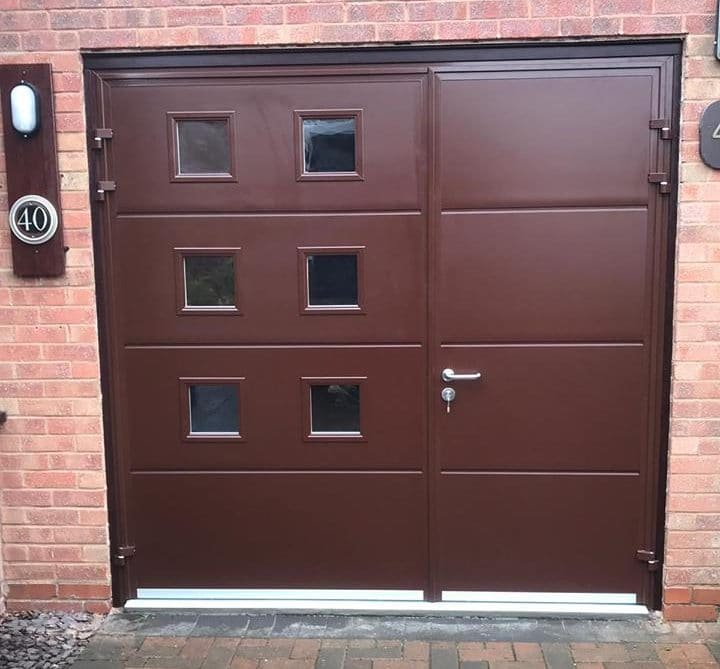
Pedestrian garage doors are garage doors that include a standard-sized access door, often referred to as a wicket door.
They are designed to allow people to enter and exit the garage without fully opening the main garage door, making everyday access quicker and more convenient.
Pedestrian garage doors are typically available in two main styles:
- Integrated Pedestrian Doors: The access door is built directly into the main garage door panel, allowing walk-in access through the garage door itself.
- Side Access Pedestrian Doors: A separate pedestrian door is installed alongside the main garage door, providing independent access to the garage.
Commonly used in residential garages, commercial buildings, warehouses, and industrial facilities, pedestrian garage doors offer a practical solution for spaces that require frequent access while maintaining security and efficiency.
Who Are Pedestrian Garage Doors Most Suitable For?
Pedestrian garage doors are ideal for homeowners and businesses that need quick, convenient access to their garage or storage space without opening the full door.
Common examples include:
- Residential garages with frequent foot traffic: ideal for homes where family members regularly enter and exit the garage.
- Warehouses, workshops and industrial facilities: for employees or staff who need easy, repeated access without disrupting operations.
- Heated or air-conditioned garages helps maintain indoor temperatures by reducing air loss every time someone enters or exits.
- Specialised facilities: such as fire stations, automotive workshops, or secure storage areas where controlled access and operational efficiency are critical.
What Are The Main Advantages of Pedestrian Garage Doors
Pedestrian garage doors offer a range of benefits, providing convenient, secure and energy-efficient access to garages without the need to open the full door.
Their main advantages include:
1. Enhanced Privacy
Pedestrian garages help protect the contents of your garage, keeping valuable items, tools and equipment out of sight.
This added privacy is especially important for residential garages and commercial storage areas.
2. Convenient Side Access
The inclusion of a side door facilitates easy and quick access to the pedestrian garage, without having to open the entire door, which is beneficial for those who need frequent access.
3. Insulated Options
Many pedestrian garage doors are available with insulated features, helping to maintain a comfortable indoor environment.
Insulated doors reduce heat loss in the winter and keep garages cooler in summer, making then suitable for heated, air-conditioned, or climate-sensitive spaces.
4. Manual Access During Power Outages
For garages with an automated door, a pedestrian door provides a valuable manual entry point.
Even during power outages, you can access your garage easily without relying on the main automated system.
Pedestrian Garage Doors vs Other Garage Door Alternatives
Choosing the right garage door depends largely on your space, access needs and installation requirements.
Pedestrian garage doors offer unique convenience, but they are not always the best option for every situation.
Here’s how they compare to other popular alternatives:
Integrated Pedestrian Doors
They work best for a new construction or when replacing an existing garage door completely, as installation is straightforward and ensures a seamless appearance.
Traditional Garage Doors
Standard garage doors are ideal for those who primarily use their garage for vehicles or large equipment.
While they provide full access to the space, they require opening the entire door even for minor foot traffic, which can be less convenient and less energy efficient.
Electric and Automated Garage Doors
Automated garage doors offer convenience through remote or sensor-controlled operation, making it easy to open and close the door without manual effort.
However, without a pedestrian access option, users still need to fully open the door for entry, which may not be practical for frequent foot traffic.
Choosing The Right Option
Ultimately the best choice depends on how you use your garage, how often you need foot access and whether energy efficiency, convenience or security are top priorities.
Pedestrian garage doors provide a practical, time-saving solution where frequent entry and exit are needed, while traditional and automated doors may be better suited for garages primarily used for vehicles or storage.
Pedestrian Garage Doors at West Midlands Garage Doors
If your garage is more than just a place to park your vehicle, a pedestrian garage door is a practical investment that enhances both functionality and efficiency.
At West Midlands Garage Doors, we provide expert guidance to help you choose the perfect garage door tailored to your specific needs, whether you require frequent access, added security or enhanced insulation.
Elevate the functionality and aesthetics of your garage with a door designed to stand the test of time.
Get in contact with us today to discuss your next home improvement project and discover how a pedestrian garage door can transform your space.
Dec 22, 2025 | Garage Door Types
Bi-fold garage doors have become an increasingly popular choice for homeowners looking to combine style, practicality and flexible access.
Offering a modern alternative to traditional up-and-over or sectional doors, bi-fold doors create a seamless connection between outdoor indoor areas.
In this ultimate buying guide, we will explain how bi-fold garage doors operate, explore their key features and available fitting options, highlight the advantages they offer over traditional garage doors, and what you should consider before choosing and installing one.
How Do Bi-Fold Garage Doors Operate?
Bi-fold garage doors are made up of multiple hinged panels that fold together as the door opens.
Instead of sliding overhead or rolling up, the panels fold and stack to one side, creating a wide, unobstructed opening.
How Do Bi-Fold Garage Doors Open?
1. Activation
Operated manually or via an electric motor using a remote, wall switch or smart control.
2. Panel Movement
Hinged panels fold together in paired sections as the door opens.
3. Guided Folding System
The panels run on a top-mounted track and are stabilised by roller or guides, ensuring smooth controlled movement.
4. Side Stacking
Once fully open, the folded panels stack neatly against the side of the garage opening, maximising access space.
5. Closing Operation
When closing, the panels unfold back into place, sealing together to form a secure, weather-resistant barrier.
This system reduces mechanical complexity and avoids ceiling obstruction.
What Are The Typical Features of Bi-Fold Garage Doors?
Quality bi-fold garage doors include specific features designed for durability, safety and ease of use.
- Panel folding system: Hinged panels fold to the side, reducing the space needed for operation.
- Tracks and guides: Smooth-running mechanisms ensure reliable movement and prevent misalignment.
- Glazing: Optional windows allow natural light into the garage while maintaining security.
- Insulation: Panels can include installation for temperature control and energy efficiency.
- Manual or motorised operation: Bi-fold doors can be operated manually or fitted with an electrical system for remote access.
- Safety features: Motorised doors may include obstacle detection and auto-stop functions.
- Serviceable components: Panels and mechanisms can be serviced or repaired to extend the door’s lifespan.
These features ensure bi-fold doors remain practical and long-lasting.
What Fitting Options are Available for Bi-Fold Garage Doors?
At West Midlands Garage Doors, our bi-fold garage doors are installed using two main fixing methods.
Face Fixing
The door frame is mounted on the external face of the garage opening, maximising the internal clearance and usable opening width.
Reveal Fixing
The door frame is installed within the brickwork for a neat finish, which may slightly reduce the opening width.
What Are the Main Design Benefits of Bi-fold Garage Doors?
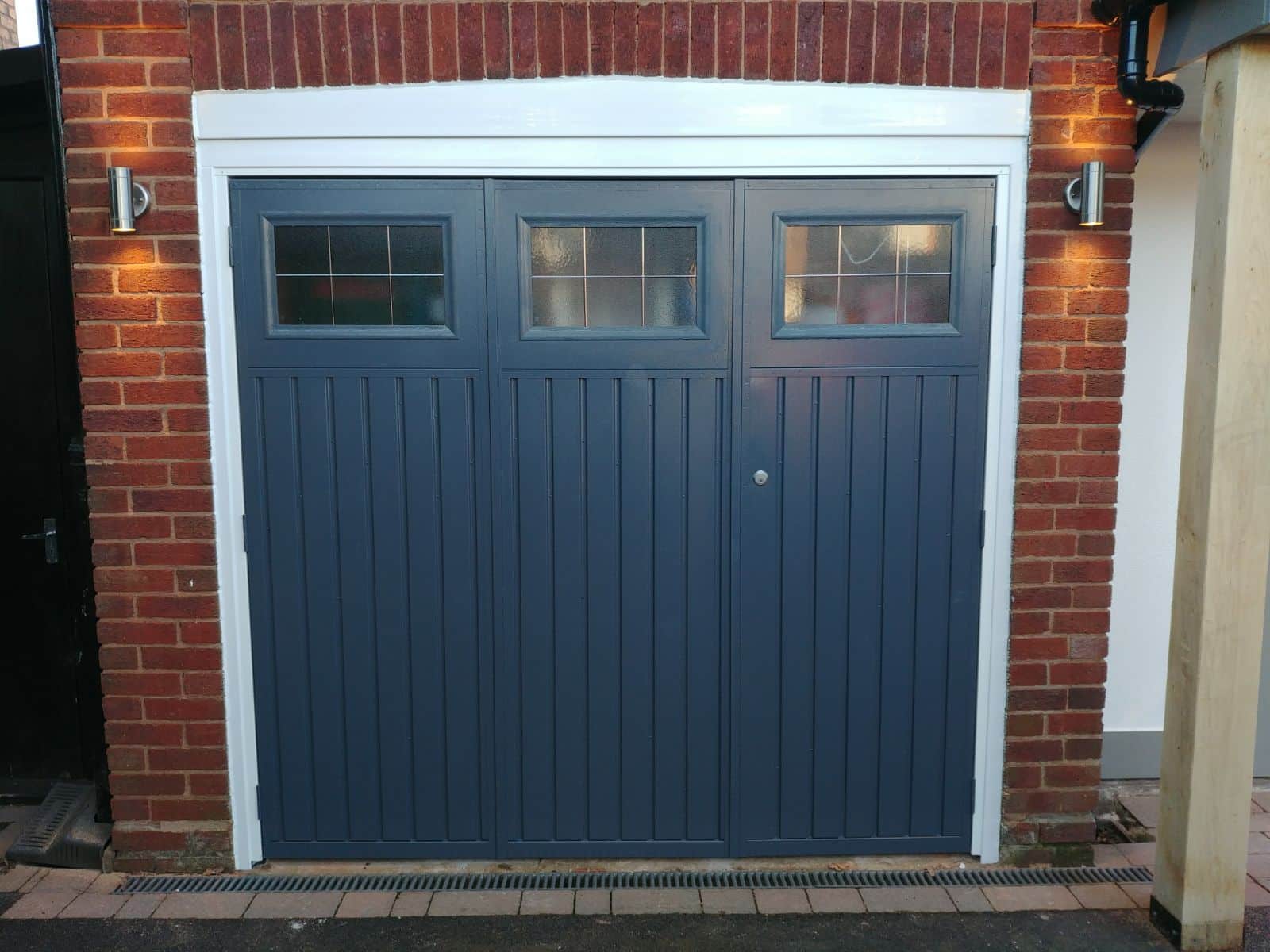
Bi-fold doors have exciting design features making them a preferred choice to traditional garage door options.
Clean, Contemporary Aesthetic
Bi-fold doors have a modern, sleek appearance with slim profiles, minimal visible hardware, and flush or near flush hardware.
This makes them an ideal choice for modern homes or architectural renovations.
Uninterrupted Openings
Unlike sectional garage doors or roller doors, bi-fold’s open to provide almost full height and width of the opening, with no overhead tracks or bulky mechanisms.
There are no ceiling lines inside the garage, making for a better visual connection between the inside and outside spaces.
Suitable For Low Headroom Spaces
As bi-fold doors don’t retract into the ceiling, they are perfect for low headroom garages, converted garages or period properties with restricted internal space.
Flexible Panel Configurations
Bi-fold doors can be designed with two, three, four or more panels.
They can be equal or asymmetrical panel widths, with left or right standing options meaning that the door can be tailored precisely to the building’s proportions.
Improved Kerb Appeal
Bi-fold doors are a strong decision feature of any property, creating a focal point on the façade.
They can significantly enhance the overall look of any premise.
Integrated glazing options
Full height glazing and horizontal vision panels with frosted or tinted glass increase more natural light into the garage or conversion space.
A lighter, more open feel is ideal for gyms, home offices or commercial studios.
Why Choose Bi-Fold Garage Doors Over Traditional Options?
Bi-fold garage doors overcome common limitations of older door types.
- No ceiling tracks or overhead mechanism, allowing for more internal space
- Safer and more practical than swinging garage doors
- Wider, full-height openings
- Greater design flexibility
- Ideal for modern or converted spaces
- Smooth and quiet operation
- Compatible with automation and smart controls
They suit modern living requirements and adaptable spaces.
What Should You Consider Before Installing Bi-Fold Garage Doors?
When selecting the right garage door for your property, you need to consider:
Garage and Driveway Dimensions
Ensure adequate side space for panel folding and stacking.
Material and Finish Selection
At West Midlands Garage doors, we offer both modern and contemporary styles of bi-fold garage doors, available in colours including beige, black, brown, red, white and grey.
Operation Preference
Bi-fold garage doors can be manually operated or electrically automated.
Glazing and Design
Adding glass panels can improve lighting inside the garage and complement the exterior of the property.
Security Features
Multi-lock points and additional reinforced panels can provide extra protection for the security of the garage door.
Maintenance Requirements
Hinges and tracks of bi-fold garage doors should be regularly checked and lubricated for long-term performance.
Bi-Fold Garage Doors From West Midlands Garage Doors
Transform your property with bi-fold garage doors fitted by our professional team.
Made to measure and available in a range of materials, colours, finishes and glazing options, bi-fold garage doors are the ultimate upgrade.
Your old door is removed as part of our full-scale service, for a hassle-free experience.
Book a free site survey today!
Nov 19, 2025 | Garage Door Comparisons, Garage Door Types, Sectional garage doors
Sectional garage doors have become one of the most popular choices for modern UK homeowners, and it’s easy to see why.
Unlike traditional up-and-over or side-hinged doors, sectional designs offer a combination of style, practicality and advanced engineering that suits a wide range of properties. Their vertical opening mechanism makes them particularly valuable for homes where driveway space is limited or where internal garage space needs to be maximised.
This guide explains how sectional garage doors work, the different types available, who they are most suited for and why they’re a great option for homeowners looking to save space in their garages.
What Are Sectional Garage Doors?
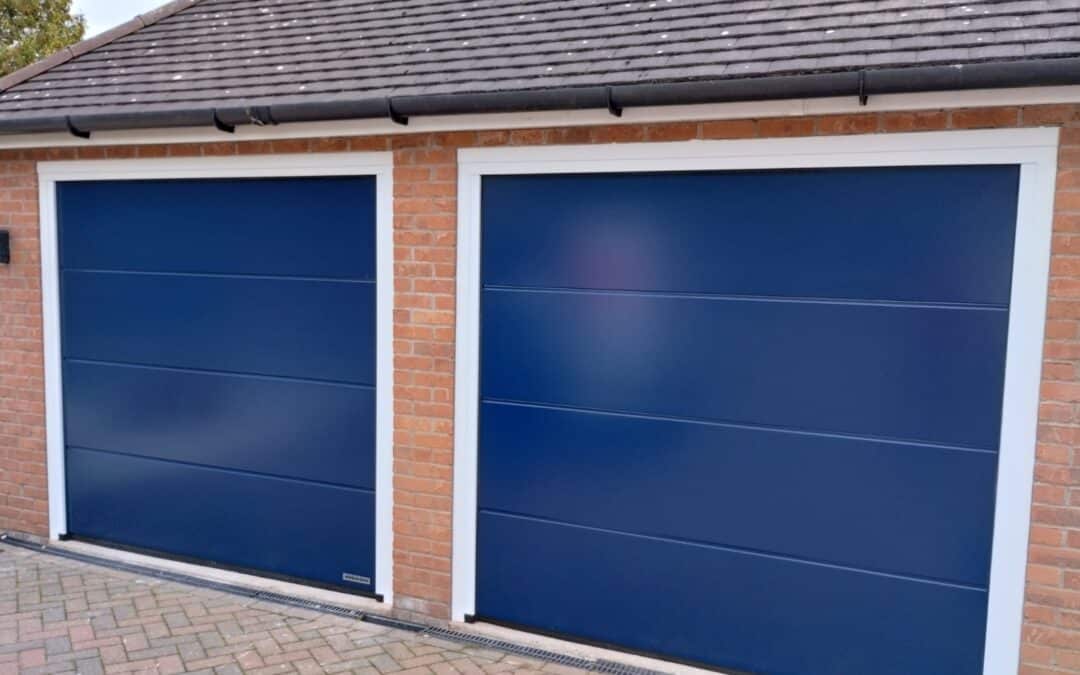
Sectional garage doors are built on horizontal panels that lift vertically before running along ceiling tracks.
The door rests flat under the ceiling, maximising space inside and outside the garage.
Types of Fittings for Sectional Doors
Sectional garage doors can be installed in different ways depending on the structure of the garage opening and the look you want to achieve. The fitting style affects both the appearance and the amount of usable space, so choosing the right option ensures the best performance and finish.
- Face Fit – The frame sits on the external face of the opening, fixed to brickwork or cladding.
- Reveal Fit – The frame sits inside the opening for a neater, integrated appearance.
What Types of Sectional Garage Doors Are Available?
Given how popular they are, sectional garage doors come in a wide range of styles and specifications to suit different homes and budgets.
From the material of the panels to the level of insulation to the external finish to additional security options.
Understanding these options helps you select a door that complements your home and delivers the right level of functionality.
Common Door Materials
- Steel: Strong, durable and affordable.
- Aluminium: Lightweight and corrosion-resistant
- Timber: Premium, natural appearance
Insulation Options
- Single skin: Non-insulated steel panels
- Double skin: Two layers of steel with internal insulation.
- Triple layer: High-grade insulation, with thick polyurethane foam for improved thermal control.
Finishes and Colours
- Wood grain textures
- Contemporary smooth panels
- Modern ribbed or minimalist designs
- Colour options such as beige, black, blue, brown, green, grey, ivory, red, white – just to name a few.
What Are Sectional Garage Doors Most Suitable For?
Sectional garage doors are most suitable for modern homes, where space is limited in and around your garage. This includes:
Homes with Short Driveways or Limited Front Space
Sectional garage doors open straight up rather than outwards, which is ideal for homes where a car is parked close to a garage door, or which have a short driveway or may be situated close to a street.
Attached Garages
Sectional garage doors can be highly insulated, making them ideal for garages attached to homes.
Their multi-layer panel construction and tight perimeter seals help maintain consistent temperatures, reduce heat loss and even minimise noise.
Garages with Low or Irregular Ceilings
The track systems used in sectional garage doors are highly adaptable.
They can be used in spaces with low headroom or sloped ceilings by using adjustable brackets or alternative track layouts that allow the door to follow the shape and height of your ceiling.
Modern, New Build homes
Newer homes often have reduced driveway depth and smaller garage footprints.
Sectional doors maximise usable space by storing flat under the ceiling. This allows:
- More internal pairing room
- Additional wall space for shelving and storage
- Improved security through reinforced tracks, strong locking systems and smart alerts
- A contemporary appearance with a wide design choice.
Key Takeaways for Buyers
Whilst sectional garage doors may have a higher upfront cost, their space-saving and insulative qualities make them the ideal choice for homeowners looking to maximise their property’s space.
At West Midlands Garage Doors, we are committed to helping you choose the right garage door to suit your style and budget.
Our installation process is simple and affordable with no hidden costs. Request a free site survey today.
Nov 19, 2025 | Garage Door Maintenance and Replacement, Security garage doors
Many homeowners underestimate the importance of garage door security, even though their garage remains one of the most frequently targeted and vulnerable entry points to a property.
Enhancing your garage with additional security features not only protects your valuable possessions but also safeguards the well-being of your family.
A burglary is more than a financial loss, it’s a violation of your personal space that can leave homeowners feeling vulnerable and shaken.
Improving your garage door security is a crucial step in preventing these risks and ensuring greater peace of mind.
What Are the Most Effective Upgrades for Garage Door Security?
The most effective upgrades increase resistance to force, block known attack methods and improve access control.
Install Anti-Snap Locks
Anti-snap locks are high-security door cylinders designed to prevent a common break-in method, known as lock snapping.
Lock snapping is the application of force to a cylinder until it breaks, allowing the burglar to manually turn the mechanism and open the door.
It is a quiet, fast and widely used break-in method.
Anti-snap locks have built-in sacrificial weak points, meaning when force is applied, the lock will break safely in a controlled way, leaving the central lock mechanism intact and protecting the internal components.
For the most effective results, have the anti-snap locks installed by a professional, qualified technician.
Key points:
- Prevents access after cylinder snapping
- Use controlled break points to protect the core
- Works with most modern garage doors
Add Improved Bracing for Door Strength
Improved bracing are additional reinforcing structures that enhance the door’s strength.
Common Bracing Materials
- Steel bars
- Aluminium bars
- Specialised brackets
Bracings enhance your door’s strength and stability against external forces including high winds, physical impacts and forced entry.
They can be installed vertically or horizontally and are anchored securely to either:
- The garage floor
- The header above the door
- Side walls
- Roof joists
The added rigidity makes forced entry or peeling the doors significantly more difficult for burglars.
What is Peeling?
Peeling is a specific burglary technique, where a wire hanger is used to peel back the top edge of the garage door panel to hook the emergency release handle from outside.
Adding improved bracing to your garage door will physically block access to internal locking rods, deterring criminals.
Use External Keypads With Secure PINs
Weatherproof keypads allow controlled access to your garage.
Typical functions:
- Set personalised pins
- Create unique, temporary codes for limited-time access
- Grant access for specific individuals such as dog walkers.
- Remote management via smartphone apps
- Anti-tamper sensors
External keypads remove the risk of lost keys and log each activation when linked to smart systems. They also prevent unauthorised door release by limiting who can open the mechanism.
This personalised locking system gives you that extra layer of security.
Install Motion-Activated Lighting
Bright lighting around the garage deters intruders, leaving them exposed and visible on security cameras.
Typical installation points to consider include:
- Above the garage door
- Along the driveway
- On side entrances
When motion is detected, the lights will alert homeowners, encouraging you to investigate or alert authorities.
Invest in Security Cameras for Monitoring and Evidence
Security cameras not only act as a strong deterrent for burglars, but if a break-in does occur, they provide high-definition footage that can be used as valuable evidence.
Useful features:
- Motion alerts
- Night vision
- Two-way audio
- Smart notifications
Install security cameras so that they directly face the garage door, this will act as a visible deterrent to discourage criminals from breaking in.
Security-Focused Garage Doors at West Midland Garage Doors
Upgrading your garage door with the right security features is one of the most effective ways to protect your home, your belongings and your peace of mind.
At West Midlands Garage Doors, we understand the importance of security.
Available systems:
- Hörmann – which are fitted with anti-theft kits when closed
- SWS – part of the SecueroGlide range, with a unique patented locking mechanism.
These products offer tested components and enhanced resistance to break-ins.
Arrange your free on-site survey today.
