
Measuring for a new garage door involves more than just the width and the height of the opening. While you can take basic measurements yourself for guidance, accurate measuring is essential to make sure the door fits correctly and operates smoothly. There are several key measurements that professional garage door installers will use to determine the correct door size and suitability including:
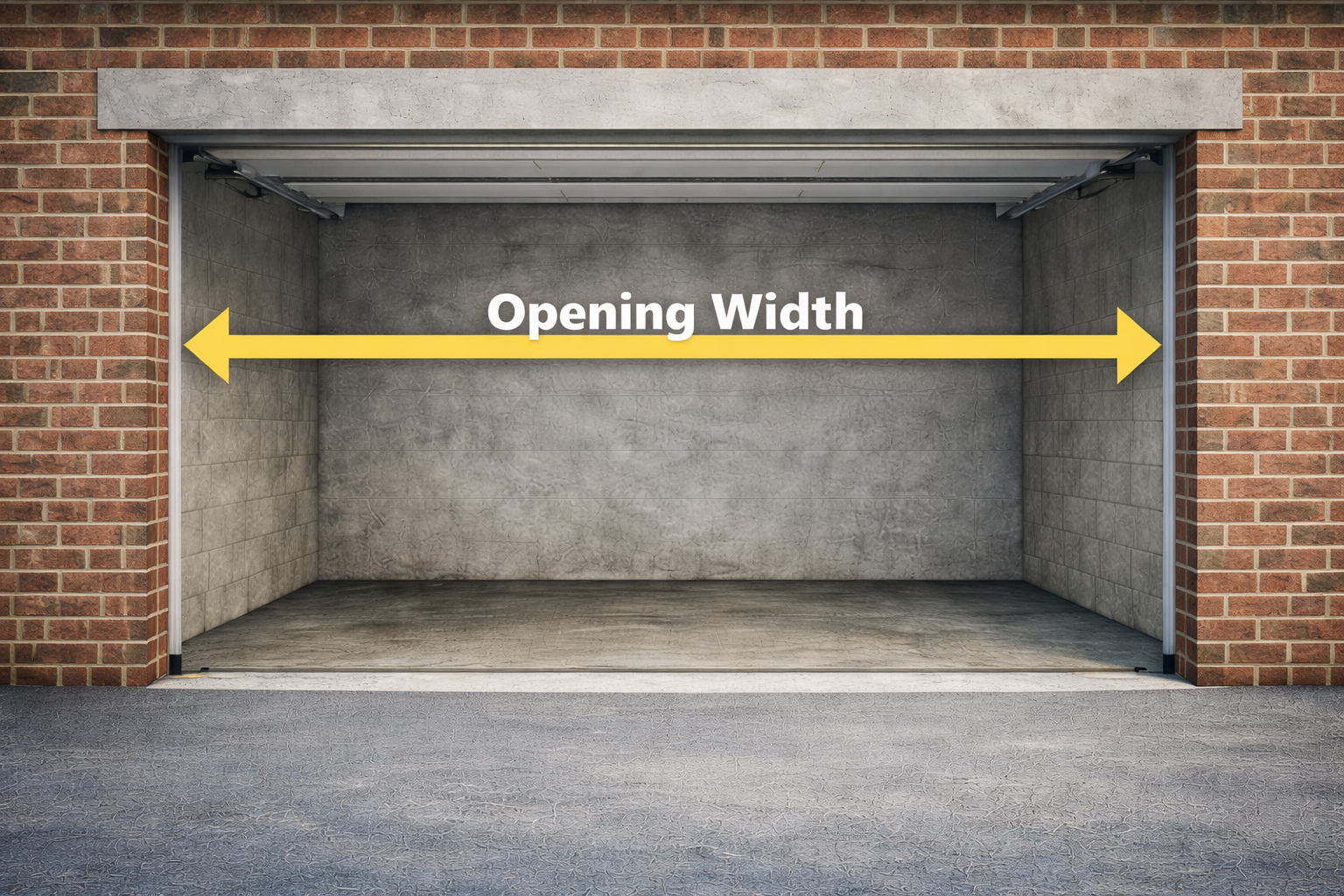
- Opening width – Measure the clear width of the garage opening from brick to brick at the widest point.
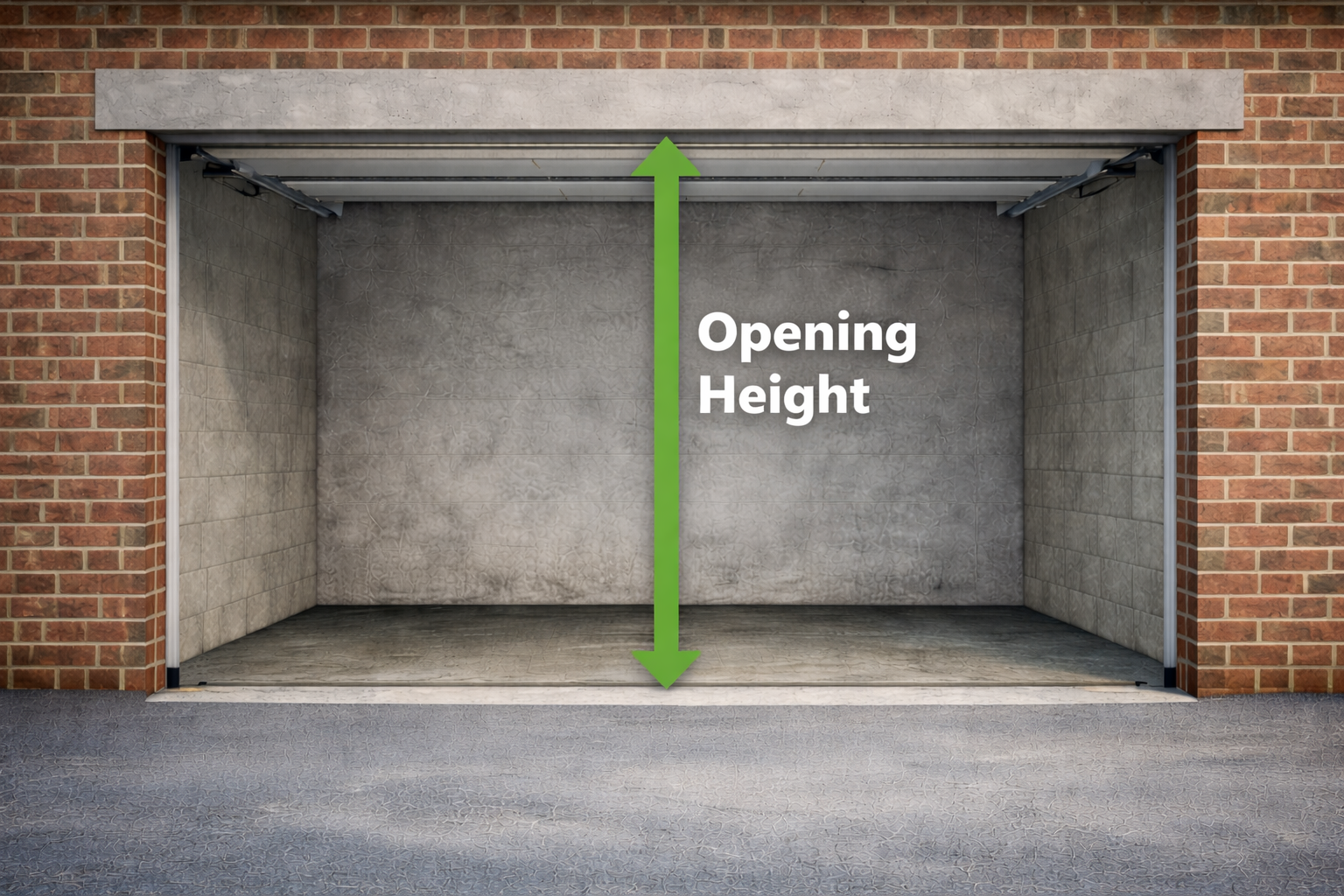
- Opening height – Measure from the finished floor level up to the underside of the lintel. It is important to check that the floor is level, as uneven floors can affect the final fit.
- Headroom – This is the space between the top of the opening and the ceiling or any obstruction inside the garage. Different door types need different amounts of headroom, especially sectional and roller doors.
- Side room – Measure the space on both sides of the opening inside the garage. This is needed for guide rails, fixings, automatic closers, hinge systems etc. depending on the door style.
- Backroom – This is the depth of the garage from the opening to the back wall. Some door types require more internal space than others to operate properly.
Each of these measurements plays a role in deciding which garage doors are suitable for your garage.
Can homeowners measure their own garage door?
You can take rough measurements to get an idea of what might be possible and to discuss options. However, these should never be used for ordering a door. Instead professional installers will have the experience to:
- Allow for structural variations and out of square openings
- Identify obstructions like pipes, beams, electrics and more
- Ensure the door complies with safety and installation standards
This is especially important if you are changing the type of garage door or installing an electric door.